The Educational Power of Word Search Puzzles (FREE Printable)
Word searches are such a fun activity! I have memories of racing my friends to find the word first or working together to solve the puzzle as fast as possible. They are perfect for road trips, classroom morning work, as well as a calm activity before bed. Parents are always looking for activities that are both fun and educational for their kids and word searches are an easy answer.
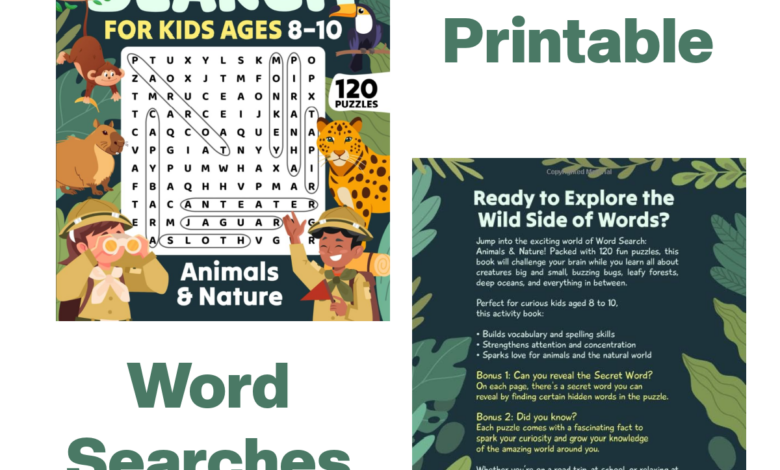
I found this new word search book for kids ages 8-10 that has the theme of animals and nature. It has some cool extras like secret word challenges and “did you know” facts. The author gave me permission to share a free pdf download with you (below).
If your child likes the free printable as much as I think they will, you can find the full book Word Search Book here.

Why are Word Searches Beneficial?
A word search might seem too simple to teach anything. It’s just a grid of letters and a list of words. But when kids do them together at the table, in the car, or on the couch, real learning happens. It is a great way to build vocabulary, practice spelling, focus better, and start to see patterns, often without even realizing it. This is learning in its most natural form.
Word searches help kids pick up new words. Each puzzle brings in new vocabulary skills in a fun way. Looking for exact letter sequences makes them pay close attention. When a child spots a word in the letter grid, especially a fun one like ‘armadillo’ or ‘chipmunk’, you can see their excitement. Puzzles with themes like nocturnal animals, climbing plants, feathered friends, or dinosaurs make kids even more curious and interested.
Word searches help kids with spelling in a way that goes beyond just writing words over and over. As they scan the word find, they slow down and notice how letters fit together and how spelling patterns work. They match the grid to the word list and see that every letter matters. This builds attention to detail, careful reading, and accuracy. Skills that help with other reading and writing tasks.
They also help kids build focus and patience. With so much going on and so many quick rewards, kids rarely slow down. A word search makes them take their time. They scan, think, sometimes get frustrated, pause, and keep going until they finish. This helps them concentrate, which is useful for reading, homework, and sticking with tough tasks. That steady progress gives them real confidence.
Word searches encourage problem-solving skills in a simple way. At first, kids scan the word search grid randomly, but soon they come up with strategies, like looking for the first letter, moving row by row, checking diagonally, or focusing on one area at a time until they find a specific word. They start to see that planning helps. This kind of thinking is useful in every subject as they get older, and they pick it up just by working through the puzzle.
Puzzles have a calming effect. Kids can get overwhelmed by school, friends, and activities. Doing a word search puzzle offers a simple way to unwind. Scanning rows, circling words, and moving on creates a steady rhythm. It helps clear their minds, making it a good activity before bed, after school, or anytime they need a break. It’s like mindfulness in a puzzle.
I love that word searches make kids curious. This book offers a variety of themes too. Give them a themed word list for an ocean animals puzzle, and they’ll start asking about coral reefs and sea turtles. A rainforest puzzle leads to questions about jaguars or sloths. Just one theme can open up new topics and get kids excited to learn more.
Word searches can empower children who lack confidence in school. Not every child loves reading, writing, or thrives under pressure, but word searches offer a low-stress, engaging way to interact with words. There’s no timed test, just a quiet challenge of finding the hidden words and the reward of solving it. Even reluctant learners often enjoy puzzles, and that success can shift their attitude toward learning.
Word games are also helpful for parents because kids can do them on their own. There’s no setup, no mess, and no instructions to explain. Just hand your child a puzzle when you need a few minutes to finish dinner, do laundry, answer emails, or simply take a break, knowing they’re busy with something valuable.
But they’re great for shared moments too. A word search puzzle can bring people together. Sitting down, sharing a pencil, and celebrating when you find a word are simple ways to connect. When kids are relaxed and focused, it’s easier to talk. Learning doesn’t always have to be planned. Sometimes, the quiet shared moments matter most. Word searches are also great because they’re easy to get and don’t cost much. With so many things needing subscriptions or upgrades, this activity stays simple. Whether you’re at home, on vacation, or waiting somewhere, all you need is a pencil and a few minutes, no screens, batteries, or passwords. It’s real, screen-free fun.
And what’s interesting about word searches is that the benefits last even after the puzzle is done. The new words, the extra confidence, and the better focus all carry over into the rest of the day. Those quiet moments you share? They often become comforting memories that last long after the puzzle is finished. Kids of all ages love these themed puzzles.
It’s amazing how something so simple can make such a difference. Word searches give kids an easy, low-pressure way to build vocabulary, improve spelling, and improve focus, often without even noticing. And it’s wonderful to see how proud they are when they find a tough word on their own.

Download the FREE Endangered Animals Word Search
You can find the entire Word Search Puzzle Book here. (*amazon affiliate link)
Kids learn a bit, gain confidence, and get a chance to relax during a busy day. In the end, word searches are more than just circling letters; they give kids room to explore, discover, and grow at their own speed. That small bit of magic is something every home can enjoy.