Are We Designing Learning For Humans—Or For Algorithms?
Why Learning Can’t Be Measured By Algorithms
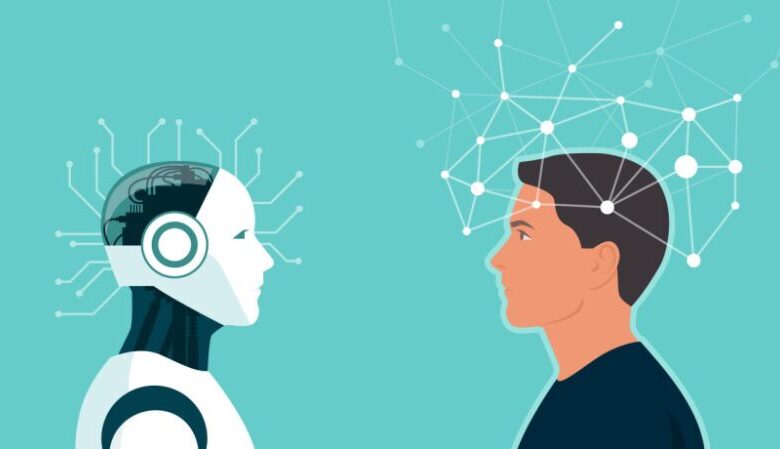
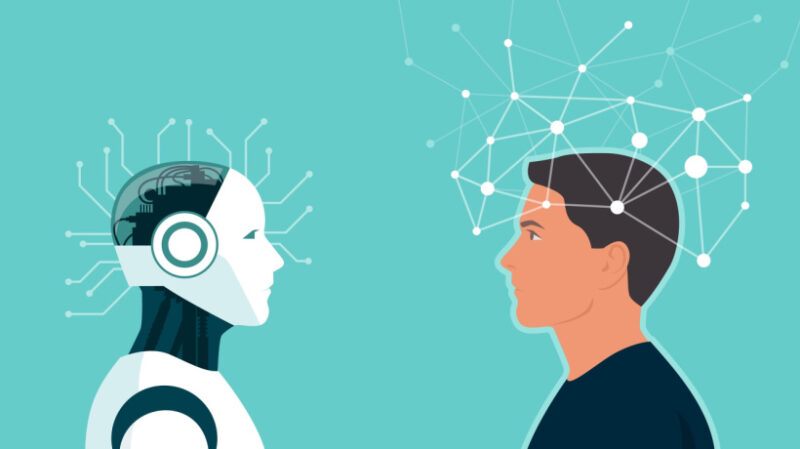
Today’s eLearning solutions use algorithms for many things, including recommendations for courses, tags for skills, scores for completions, heat maps, and metrics for engagement levels. Anyone interested in eLearning sees learning in new ways; all of those ways are measurable, sortable, and optimizable. We seem to have come a long way in terms of learning. Through data-driven learning, one can increase efficiency, personalize learning, and scale it up. The hard question for L&D teams to consider is whether they still design learning for people or whether they design learning for algorithms.
Learning design has been optimized based on what the system will reward (i.e., the system incentives), leading to larger numbers of shorter learning modules, greater numbers of assessments (which are easier to measure, track, and report via an LMS), as well as smaller, bite-sized content (which is what we refer to as microlearning).
Optimizing learning experiences offers great value to participants, as many learners only care about completing a learning experience to measure success, not about building the capability to succeed. The learning experience was never meant to be “frictionless”; true learning is gained through making mistakes, taking the time to reflect on them, and learning from them, and none of those things are measurable by algorithms.
Is AI-Driven Personalized Learning Helpful Or Hollow?
There is no doubt that many people use AI-based personalized learning to identify which material is most suitable for each learner based on their previous learning experiences, behaviors, and roles. When used effectively, learners should have access to the right material at the right time.
Most of the time, recommendations are based on a limited number of data points. What users have clicked on, how long they have viewed an item, or the words used to describe it. The recommendation engine only captures what users have viewed; however, it does not capture what users have learned or can apply.
So, the user ends up continuously receiving recommendations that are easy and repeatable for them because they have a high level of familiarity with those recommendations, which, therefore, are less challenging. It is through challenging oneself to step out of one’s comfort zone that individuals develop, while engagement will encourage more engagement from the algorithm.
As a result, the user will enter a familiar cycle of learning where they continue to achieve success, but without real behavioral change.
Engagement Is Not The Same As Learning
I can provide numerous examples to support the theory that learning has a significantly greater impact than just engagement at the activity level. There are many instances where learners had high levels of activity when performing a task, yet by the next week, they were unable to recall any knowledge from that performance.
For instance, consider someone who had a difficult time completing a simulation. This learner might have had very low levels of actual engagement; however, due to the difficulty of completing the simulation, they likely learned and could recall the specific information being taught very well.
When an algorithm is designed to provide maximum learning based on measurable activity, it optimizes for that activity rather than optimizing for the vast amount of knowledge growth that a learner can achieve.
The irony is that the most effective methods of learning are the least measurable when compared to the measurable methods of learning: reflection, peer-to-peer learning, and quiet epiphany.
Where Humans Still Outperform Machines
While algorithms can quickly find patterns in data and recognize many things at once without much effort, the application of human judgment, empathy, and understanding adds a level of value to the learning design process that cannot currently be achieved using algorithms alone.
The use of algorithms when designing the learning experience will have to be applied in the appropriate sequence and order to create an effective learning environment. Using algorithms to identify gaps in learner knowledge, tailor learning paths, and reduce administrative tasks will all support the need for human judgment regarding what constitutes “effective learning.”
The definition of effective learning must encompass the following characteristics:
- Creating authentic experiences that represent the richness of complexity in the world.
- Posing questions that can legitimately have multiple valid answers.
- Cultivating reflective, critical thinking, and questioning skills among learners.
- Fostering a shared understanding among learners in an environment conducive to developing social learning and common meaning.
All of the above are necessary components of effective learning, and none of them are inefficiencies.
Designing eLearning Systems With Algorithms
The future direction of eLearning system design will not be achieved by either abandoning or relying solely on algorithms, but rather, it will be achieved through the development of systems that integrate both approaches. Therefore:
- Design the experience first for humans and then use algorithms to enhance and provide support for the experience.
- Before developing or implementing any new features or metrics for eLearning systems, you should consider three important questions:
- Will the feature/metric improve an individual’s ability to think and/or change their behavior?
- Are we measuring how easy it is to accomplish something versus what is truly important?
- If a feature/metric were not available in a dashboard, would the feature provide value?
If the answer to all three of these questions is “yes,” then you have established a solid foundation for your eLearning system.
Final Thoughts
The conclusion is that education does not simply serve to provide information; it serves to shape the learner’s identity. The learner can understand their role in society and how they will contribute to the world.
An algorithm may suggest a path for you to follow, but where you will arrive is ultimately up to you as the individual learner. In the end, learners do not need improved or more optimal learning experiences; they need learning experiences that consider how humans are designed to grow and develop.