Student Intention: What Motivates In Choosing Online Courses
Beyond Enrollment: Why Student Intent Must Drive Online Learning Strategy
Online learning has been a buzzword in the education sector. Educational institutions consider it to be an essential aspect of their growth strategy. However, most of the online learning programs are designed with limited consideration given to students’ intentions to take such courses. I have encountered many academic professionals and team members who believe that the more online courses they offer, the more students will enroll. However, offering more courses online is not the only strategy to increase online course enrollment. Students make well-calculated decisions before choosing the learning modality they will take.
A recent study on students’ intentions to take online courses highlights that performance expectancy, hedonic motivation, and flexibility are the main reasons why students adopt online learning programs. This finding is like what I have seen in the study of student enrollment trends in higher education. If we want to discover the secret of turning student curiosity into a commitment to completing an academic program, we need to understand the motivations for student course enrollment.
Performance Expectancy: Will This Help Me Win?
What will I do well with? What won’t I do well with? This is one of the biggest questions for students, especially for working professionals who want to take advantage of programs online. Their concerns aren’t usually technological, it’s about academic rigor. If they think the academic rigor won’t be there, they won’t enroll. Performance expectancy is not about marketing claims. It is about visible proof:
- Clear learning outcomes tied to real-world skills.
- Transparent grading models.
- Faculty presence and responsiveness.
- Career alignment with industry demand.
Adoption depends upon the success of those who have completed it. They give data that generates confidence in the competencies acquired by students. Employers and professional organizations whose seal appears on certificates attest to authenticity and worth.
Effort Expectancy: How Hard Will This Be To Navigate?
Ease of use still matters. Not because students lack digital literacy, but because friction erodes motivation. I once worked with a university whose LMS required five clicks to access recorded lectures. Drop-off rates in the first two weeks were alarming. When we simplified navigation and centralized resources, early withdrawals declined. Effort expectancy influences early impressions:
- Is onboarding and enrollment seamless?
- Are platform accessible across devices?
- Is technical support visible and fast?
In AI-enhanced environments, usability becomes even more critical. Institutions exploring adaptive systems and intelligent tutoring are seeing meaningful shifts in engagement when these tools are embedded naturally into the experience rather than bolted on as add-ons [1]. Technology should disappear into the background. When it becomes an obstacle, commitment weakens.
Hedonic Motivation: Fun With Learning?
Sounds trivial but it’s not. Students may not say it’s “fun” but students respond strongly to engagement. Programs that offer lots of interactive learning, such as simulations, discussions, peer-to-peer learning, even student polling during class, create a different energy level from passive learning.
From what I’ve seen, programs that generate this sort of engagement outperform those that just do recorded lectures. Students keep coming back. So yes, on a process level, enjoyment (hedonic motivation) does impact retention.
Flexibility: Does This Fit My Life?
Flexibility consistently emerges as a decisive factor Understanding student intention. For working professionals, parents and global learners, schedule control is not a perk. It is the entry ticket. But flexibility is evolving. It is no longer just asynchronous access. It includes:
- Modular course design.
- Stackable credentials.
- Self-paced progression options.
- Multiple start dates.
When I evaluate program pipelines with enrollment teams, flexibility almost always correlates with growth segments such as workforce learners and mid-career switchers. Forward-thinking institutions are building AI-powered learning ecosystems that personalize pace and content sequencing, supporting workforce upskilling at scale [2]. This is where flexibility becomes strategic, not tactical.
Social Influence And Institutional Trust
Testimonials from industry leaders and alumni of the course have also been shown to increase conversion rates. When successful managers and business owners sing the praises of an online management course, enrolment figures naturally improve. Furthermore, employers are often impressed if a past employee has acquired additional qualifications and expertise in the field of management. The importance of reputation is therefore clear, and it is no less important if management courses are taken online.
Translating Intent Into Institutional Opportunity
Knowledge of these theories is helpful, but what’s more helpful is a practical tool that can be derived from these theories. The following table (Table 1 below) was presented to university and IT leaders.
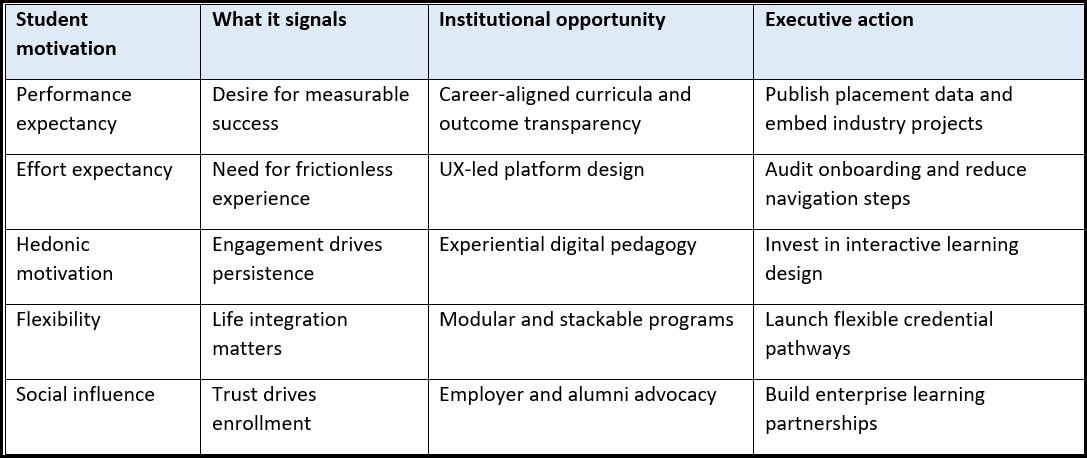
Table 1: Indications, Opportunities, and Action
These factors (Figure 1) keep motivating students to committee and continue with learning journey. When institutions align design decisions with these drivers, enrollment becomes more predictable.
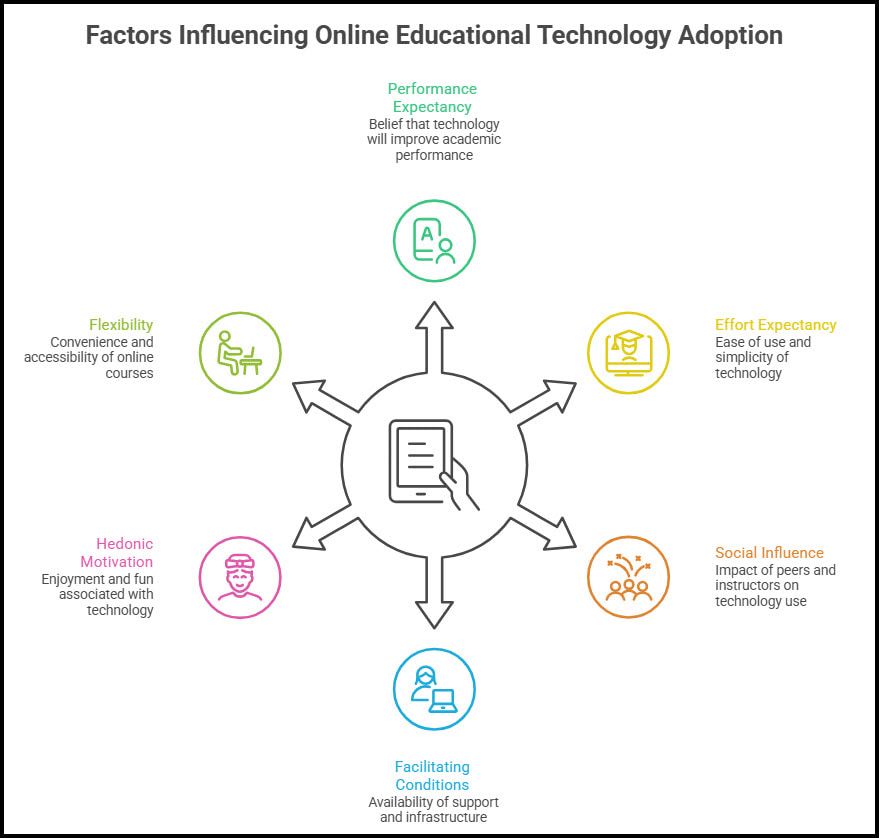
Figure 1: Factors Influencing Online Educational Technology Adoption
Rising Digital Standards Are Reshaping Enrollment Strategy
Greater exposure to online education is changing student expectations. It’s not that students compare one academic platform to another. It’s that they compare their academic platform to the best digital experiences they encounter every day. Streaming. Personalization. Responsiveness. Not premium expectations. Baseline expectations. For higher education CIOs, this is a startling reality. Infrastructure. Data. AI-enabled experiences. These are no longer back-office concerns. They determine whether students see value, and even whether they enroll at all.
From Insight To Execution
Students choose programs out of curiosity. They commit to online programs based on modality alignment with their ambitions, lifestyle and expectations of quality. In my work with higher education institutions, I have learned this: understanding what students value and designing online programs accordingly transforms more than their enrollment rates. This creates digital ecosystems that support their strategic growth. This is the future of education, and it all depends on understanding student intention.
References:
[1] Intelligence Redefined: The Expanding Role of AI- Based Technologies in Higher Education
[2] AI-powered learning ecosystems: A guide to workforce upskilling
Image Credits:
- The image and table within the body of the article were created/supplied by the author.