An Inside Look at Dual Enrollment
Dual enrollment is a massive and growing trend; according to federal data, 2.8 million high school students were enrolled in at least one college class in the 2023-2024 academic year, the most recent year available. At the average college, dual enrollment students accounted for more than a quarter of all enrollment.
Despite its increasing prevalence, the field is still relatively young—its membership organization and accreditation body, the National Alliance of Concurrent Enrollment Partnerships, celebrated 25 years at its Los Angeles conference last week—and programs vary wildly from state to state and institution to institution. Some programs are offered in high school settings while others take place on college campuses. Some states have fewer than 10 percent of high schoolers enrolled in dual-credit courses, while in others the share is approaching 50 percent. Most programs are targeted at high school juniors and seniors, but some extend all the way down to ninth grade.
It’s also a field that’s changed a lot from its earliest days, when it was seen as an elite opportunity for talented high schoolers to take classes that adequately challenged them. Inside Higher Ed sat down with Amy Williams, NACEP’s executive director, over Zoom to discuss some of the key talking points of the 2025 conference. The interview has been edited for length and clarity.

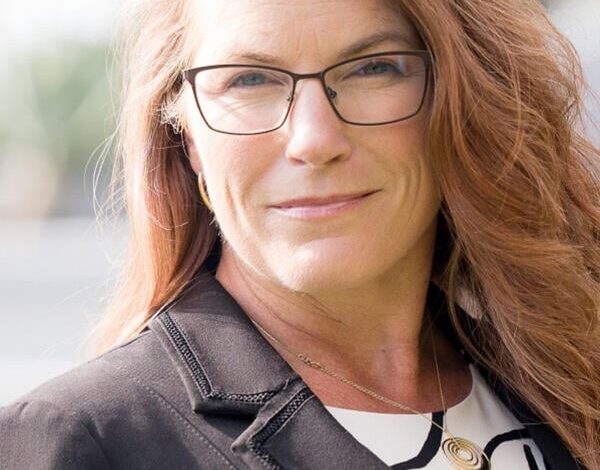
Amy Williams, executive director of NACEP
Q: Twenty-five years into NACEP’s existence, can you talk a little bit about how the purpose of the organization has changed as dual enrollment has grown?
A: The moral compass is more or less the same, right? We’re still trying to ensure that all students have access to high-quality programs in whatever format that entails. I think the way that we get there certainly has shifted, but that’s front and center in our conversations. At the heart of our work is volunteerism, too, and that’s very important because the solutions that work for the field come from the field, right? They’re not generally coming from places outside that have not done the work. So, I think our practitioner group is highly sensitive to that and really wants to pitch in and make sure that they’re there to help support their colleagues and just build this movement further, because it did start grassroots, at a very small level, and now we’ve seen it transform. That can be unwieldy unless you’re in contact with those doing the work and they feel that the work that you do earnestly helps support and advance what they’re working on.
Q: I think it’s interesting, the intersection of what you were just saying about the people that work in the space being the most informed and leading this, but also it being something that governments and states are taking a huge interest in. Tell me a little bit about what the policy landscape is right now.
A: At the highest level, these programs live in the in-between space. They’re not college, they’re not high school, they’re both-and, right? There is a lot of statutory and policy-based guidance on either side, and for years, NACEP really played an important role in providing that guidance and policy insight in the middle, in-between space, and that’s a really important role we still play today.
We’ve seen over time that states have stepped in more and more frequently to put policy together, but it’s very reactive, in our experience. In fact, we just finished a 50-state policy scan, including D.C. as well, and looked at how states talk about quality—if they talk about program quality at all. What we found is that states tend to, more or less, [develop policies] as a reaction to, let’s say, some turf issues that might come up in the state or some need for higher levels of guidance or more clear guidance on teacher credentialing or [funding].
What states tend to not talk about is that holistic program quality. There’s a lot of focus on ensuring that instructors, especially in the high school space, are appropriately credentialed, that curriculum is aligned and assessments are aligned so you really do get that authentic college course in a high school setting. So, there’s a lot of attention to that type of quality, but way less attention to things like giving students access to advising, getting them comfortable with using and navigating college systems, having them understand boundaries, guidelines and timelines, like, “Why would you drop or withdraw from a course and when does that happen?”
So, we’ve really leaned in on that more holistic view, and that’s really been at the heart of our work for a long time.
Long story short, the big-picture thing is these programs have grown from small grassroots efforts to a statewide approach to education, and yet the undergirding systems and the attention and the seriousness that policy generally devotes to this has not yet caught up in most states.
Q: There is a changing perception of dual enrollment’s purpose, going from something for students who are very advanced to get ahead to something that is for all sorts of different students to get the chance or the opportunity to get college credits or save money or whatever the goal might be. This has sparked some debate in terms of, is this something that should always be available to every single student, or should there be some level of gatekeeping? Could you talk a little bit about just how you’re thinking about that question?
A: When we talk about [this question], we talk about this paradigm shift from moving from more of a program specifically targeted at a certain group of students to more of an [idea that] all students can benefit from this. As much as we can, we want students’ first experience with higher ed to be a successful one and at least a very positive one. That was one [thing] I used to tell faculty a lot: “This will be, for many students, their first touch with college. What do you want that experience to be?”
Even within the session I moderated [at the NACEP conference], which was about our Online On Purpose resource, we talked about, what’s the appropriate line between hand-holding, which is perceived as watered down and less rigorous, and appropriate supports at appropriate times for the right students? I think there’s a lot of nuance in there, but education is always nuanced, right? Not every student is a one-size-fits-all.
When I used to do this work, I would talk to students about, “Look, this is not a no. This is a stop-and-check point.” We did, in the state that I worked in, have a couple boundaries and guidelines. I would note that none of them were tied to student GPA. They were much more focused on students’ willingness to take this on and perception of what they wanted to do with it, as well as someone in the high school ensuring that they felt like the student was ready for this next step. I think that’s a critical component.
Q: There’s usually a really small number of people working at each dual- enrollment program, and that seems like it could be a major problem in a field where there is so much need for different people to provide student support and providing oversight. At the same time, obviously, we’re in such a weird time for higher ed.
A: Really? Hadn’t heard that.
Q: Yeah, it’s a little secret. No, but how should institutions square this away when their dual-enrollment programs are growing at many, many times the rate they could scale up their staffing for these programs?
A: That’s a critical question institutions need to address, and I think it does start with: Why are you doing this? If you know why you’re doing this and who your population is that you want to serve, then you build around there and that scaffolds out your whole program. In fact, I very frequently will tell states and individual programs, “Please, systems before scale, right? Lock down your system, make sure it works. And then move towards scale.”
I do think that a variety of different digital platforms [offer] a lot of ways to offload some of the nonpeople things so that the people can do the people things. So, I think that automation or technology has a bit of promise. But I do think that institutions doing this should be very clear about what they want to accomplish, they should be measuring what they’re getting out of these programs and they should listen to their staff about appropriate staffing.
In fact, we started surveying our members to get a bit better handle on, what does staffing look like? We hear people say all the time, “Oh, I’m so understaffed and underappreciated based on the complexity.” OK, but what does that look like? Does that mean that you need access to more of an advising pool? Because we know that on the higher ed side, college partners are undergoing a significant shift. How can those staff be repurposed? If undergrad enrollment is dropping, can you take those advisers and repurpose them?
So I think that, to some extent, these programs are interesting because they go beyond the mission of both institutions, both K–12 and higher ed. That’s a legit thing. But they do offer some efficiencies.
Q: I also wanted to touch on the research side of things; there obviously seems to be a lot of good research about dual enrollment already, but there also seem [to be] several areas where people are kind of chomping at the bit to know more about it. Can you talk a little bit about what data you think is lacking?
A: If this was my wish list of what I wanted to know most: the appropriate dosage. We’ve got some states that are moving very heavily towards getting every student an associate degree [before they graduate high school] or getting every student 30 [college] credits. We’ve got some research that comes down at the early-college high school side of the house that shows that that’s incredibly impactful. However, it’s not necessarily doable in a state like, let’s say, Montana, where there is just not the same amount of critical mass to build an early-college high school program.
So, then the dosage question becomes, where is the sweet spot for students? And I would argue, even one up on that, based on what their motivations are—a student that’s coming in to explore and test themselves to determine whether this is something they want to pursue, like, “Am I college material?” They’re going to get a different thing out of their participation than a student that literally is trying to position themselves to be a higher-level applicant for a nursing program, so they really want to hit it academically and show that they’ve got a start underway, versus a student that’s trying to save a significant amount of time and cost. Those are different use cases.
That means the type of infrastructure that has to exist to get all students in a school district 30 credits is going to look very different than giving students access to maybe a gateway math [course], a gateway writing [course], as well as like three or four hot-topic trending career or major areas. That kind of structure element, I think, is really important.
I would also say, because teacher credentialing is one of the areas that people most cite as a pain point and an inhibitor for developing more, [research on teacher credentialing] would be really nice, too. We’ve actually looked at how to start approaching research and get partners to work on research, to look holistically at, really, what are the best skills and instructional strategies and teacher-preparation elements for that middle space, the last two years of high school, the first two years of college? What are the skills, experiences and education that make and optimize an instructor in that time frame? We know that there’s a lot of emotional, social and academic development that overlaps in that time frame, so how do we make sure that that kind of transitional education is strong based on what we’re asking for teachers to do?