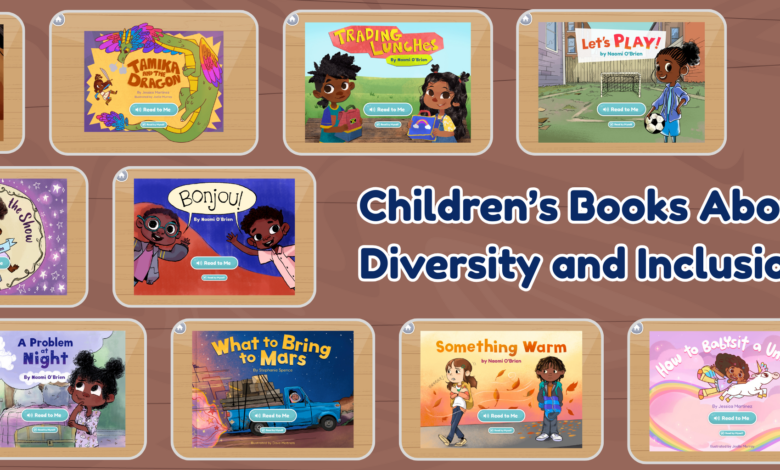
Children’s Books About Diversity and Inclusion
By Megan Colburn, Marketing Lead, Khan Academy Kids and mom to elementary learners

Children’s books are a wonderful way to talk to young children about diversity and inclusion. Black History Month is a great time to start. But children’s books about diversity and inclusion shouldn’t be something we only talk about in February. Kids deserve stories that reflect Black joy, family, culture, and imagination all year long.
In the free Khan Academy Kids app, you’ll find books that feature not only Black characters, but characters representing Japanese, South Asian, African, Caucasian, Middle Eastern, Latino, Italian, Afro-Latino, Hawaiian, Indigenous, and mixed-race children and families, in ways that feel real and joyful. These stories include cultural details many kids recognize-like a bonnet at bedtime-and also defy stereotypes. These diverse characters are brave dragon slayers, caring unicorn babysitters, and loving family members.
Just as important: these books help all children grow their view of the world. When kids see many kinds of people in stories, they practice empathy, curiosity, and respect-one page at a time.
Why children’s books about diversity and inclusion matter
Stories don’t just help children develop their early literacy skills. They also help answer big questions like:
- Who am I?
- Where do I belong?
- What should I do when something feels unfair?
- How do I make a new friend?
When kids see Black characters in many kinds of roles—heroes, helpers, leaders, learners—it builds confidence and belonging. And when kids who aren’t Black read these stories, it helps them build understanding and kindness.
That’s what “diversity and inclusion” can look like for young kids: seeing, listening, learning, and caring.
11 stories featuring Black characters in Khan Academy Kids
Here are 11 books to read for Black History Month—and keep in your rotation beyond February.
1) A Problem at Night
by Naomi O’Brien
A little girl can’t find her stuffed animal at bedtime. She tries calm, smart steps to solve the problem. This story also reflects everyday family routines many kids recognize—like wearing a bonnet at night.

Kids may learn/feel: “I can handle a problem.”
Great for: bedtime, big feelings, self-control
2) Jada’s House
by Stephanie Spence
Jada loves her creaky house by the sea. When a storm pushes her to spend time with her neighbor, she learns there’s more to him than her first impression. A warm story about empathy and friendship.

Kids may learn/feel: “I can rethink my assumptions.”
Great for: friendship, kindness, repairing relationships
3) What to Bring to Mars
by Stephanie Spence
Russ is moving away from Grandma’s house. Change feels hard—so he uses imagination to make sense of it. This is a tender story about family love, memories, and brave new beginnings.
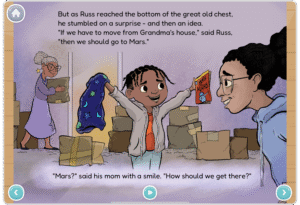
Kids may learn/feel: “It’s okay to feel sad about change.”
Great for: moving, transitions, separation feelings
4) Why Is Our Skin Different Colors?
by Naomi O’Brien
A child wonders why her skin color is different from her friend’s. She learns about melanin in simple language and celebrates how people can look different and still belong.

Kids may learn/feel: “Questions are okay—and differences are normal.”
Great for: identity, respectful curiosity, science + self
5) Bonjou!
by Naomi O’Brien
Leo speaks Creole at home, but he doesn’t want anyone at school to know. When he meets someone who speaks Creole too, Leo has a choice: hide, or connect. A sweet story about pride and belonging.

Kids may learn/feel: “My home language matters.”
Great for: bilingual kids, confidence, new friendships
6) Let’s Play
by Naomi O’Brien
A group of friends plays soccer every day. When new boys join and underestimate the girls, the girls show what they can do—and everyone learns to treat people fairly.

Kids may learn/feel: “I deserve a fair chance.”
Great for: confidence, teamwork, fairness
7) Trading Lunches
by Naomi O’Brien
Two friends bring lunches the other has never seen before. At first they’re unsure, but then they taste—and learn. This is a great story about culture, curiosity, and respect.

Kids may learn/feel: “New things can be different—and wonderful.”
Great for: picky eaters, classroom community, cultural pride
8) How to Babysit a Unicorn
A kid wins the chance to babysit the class unicorn. It’s funny, magical, and also real—because caring for someone (even a unicorn) takes patience and responsibility.
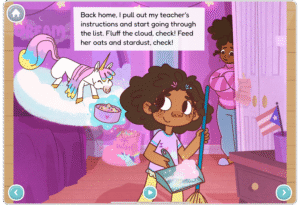
Kids may learn/feel: “Being trusted is exciting—and hard.”
Great for: responsibility, honesty, making it right
9) Star of the Show
by Naomi O’Brien
A girl auditions for a school play and hears people talking about what the “star” is supposed to look like. She goes for it anyway. A brave story about believing in yourself.

Kids may learn/feel: “I can shine as myself.”
Great for: courage, confidence, trying new things
10) Something Warm
by Naomi O’Brien
A child has outgrown a coat. When he notices someone else who needs something warm, he has to decide what kindness looks like. A simple story with a big heart.

Kids may learn/feel: “I can help someone.”
Great for: empathy, generosity, community care
11) Tamika and the Dragon
by Jessica Martinez
Tamika trains to face a dragon who makes toys in a mountain cave. But the story takes a surprising turn—Tamika chooses understanding over “winning.” A fun twist on the dragon-slayer tale, starring a brave Black girl who leads with heart.

Kids may learn/feel: “I can be strong and kind.”
Great for: empathy, problem-solving, friendship
How to use these books in the classroom
These stories work great for morning meeting, read-aloud time, and SEL.
Try one of these easy moves:
- Read + Turn and Talk: “What did you notice?” “How did the character feel?”
- Vocabulary boost: Pick 3 words (example: brave, fair, proud). Act them out.
- Connection question: “Does this remind you of your life?” (Food, family, language, bedtime routines.)
- Kindness challenge: After Something Warm or Jada’s House, ask: “What’s one kind thing we can do today?”
- Fairness mini-lesson: After Let’s Play or Star of the Show, ask: “What does fair mean?” Make a class list.
- Culture with respect: After Trading Lunches, invite students to share a favorite food from home—no teasing, only curiosity.
Teacher tip: Keep it simple. One story + one question is enough to build belonging.
Watch and talk together: videos to pair with these books
These Khan Academy Kids videos are easy to watch together—and they open the door to great conversations.
- Saying Hello and Making New Friends (pairs with Bonjou! and Trading Lunches)
- What Is Justice? (pairs with fairness themes in Let’s Play and Star of the Show)
- What Is Diversity? | Celebrating People and Their Differences (pairs with the whole set)
- Why Is Our Skin Different Colors? (pairs with the book of the same name)
What Is Race? | How To Talk To Kids About Identity And Race (pairs with the whole set)
Khan Academy Kids is made for children ages 2–8 and is 100% free. Download the app and explore these stories (plus many more) in the Library.
Download Khan Academy Kids — it’s 100% free.
Concerned about screen time? Check out our post, Healthy Screen Time for Young Children to help your little learners build healthy screen habits.