How to Make a Sensory Bin: Everything You Need to Know
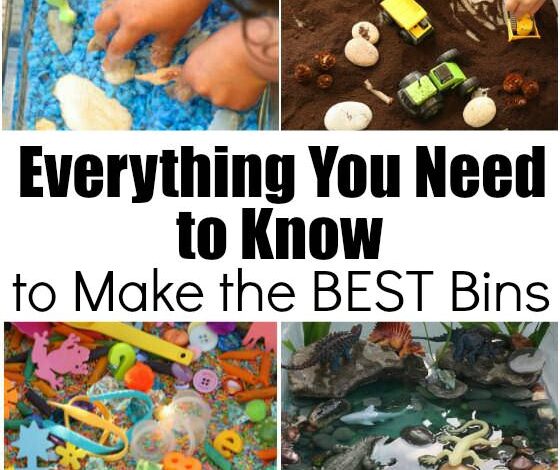
Learn how to make the best sensory bins to entertain and teach your child, and to facilitate creative thinking and fine-motor development.
Some of the hooligans, now 8, 9 and 10 years old still talk about the sensory bins they loved best during their early years here in my daycare. Those bins made such an impression that the kids still recall the feelings they had exploring the bin, the exciting discoveries they made, and um… how much they smelled like shaving cream for the rest of the day, even though it was more than half a life-time ago for them.
I know what some of you are thinking…
“No way! My kid would make a huge mess with a bin of rice or corn kernels”, or “Are you crazy? My toddler would just want to eat everything in the bin!”.
To minimize the mess:
First of all, if you’re worried about the mess, put a tablecloth, sheet or towel under your sensory bin. That way, you can tip spills back into the bin when your child finishes playing. Alternatively, your kid can play with their sensory bin outdoors where messes won’t matter.
Give clear instructions:
Secondly, give your child clear instructions for playing with the bin. Explain that the contents are not to be eaten or tossed around. Supervise the play to ensure things don’t get out of hand, and you’ll find that the joy and the developmental benefits that a sensory bin provides will outweigh any mess.
A world of discovery in a box
A great sensory bin is like a world of discovery in a box. It encourages open-ended play and provides endless opportunities for experimenting and learning.
Today, I’m sharing some tips and suggestions, and some examples of our favourite bins to help you create the very best sensory bins for your children and students.
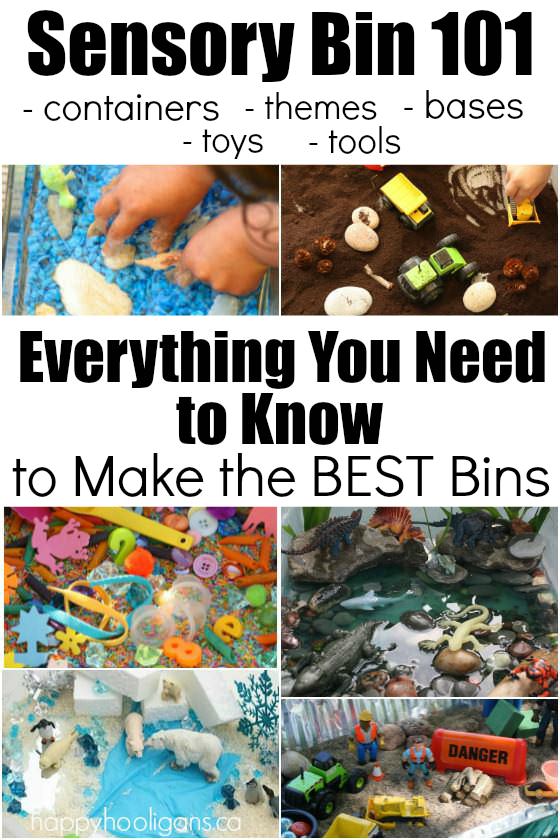
In this post, we’ll discuss:
- The Benefits of a Sensory Bin
- Good Containers for Sensory Bins
- Suggested Themes (with Photo Examples) to Get You Started
- Base Materials to Use in a Snsory Bin
- Interesting Items to Put in a Sensory Bin
- Good Tools and Instruments for Sensory Bin Play
What are the benefits of a sensory bin?
There are many benefits to playing with sensory bins. For starters, our ability to learn and retain new knowledge and information is enhanced when multiple senses are engaged. This is why sensory bins are so often recommended for play and learning.
A sensory bin will also:
- encourage critical thinking – a child will problem-solve, make observations and conclusions as he scoops, pours and measures
- foster imagination – your child may pretend to be a baker or a scientist with the instruments you’ve provided.
- strengthen fine-motor skills as your child manipulates tweezers and tongs and other small items in the bin
- build language skills and introduce new vocabulary when new and unfamiliar items are used in the bin
- be a wonderful addition to your curriculum as you can make a bin for almost any theme at all.
- provide hours of play and learning.
Before you make your sensory bin, decide on:
- what kind of container to use for your sensory bin
- a theme for your sensory bin
- what to use as a base for your sensory bin
- toys/materials to fill your bin with
- tools and instruments to provide with your sensory bin
I’m going to talk about all of those things, and I’ll share photos of many of the popular sensory bins that I’ve made for the hooligans here in my home daycare.
Feel free to duplicate them in your home, daycare or preschool classroom.
How to Make a Sensory Bin:
Choose a container:
The size of the container you choose for your sensory bin will depend on how many children will be playing with it.
For a small sensory bin:
For one or two children, these work well:
- a shallow cardboard box
- a foil roasting pan
- a small baking dish
- a shallow Tupperware container
- dish tub
For travel and on the go:
If you want to make a sensory bin to take with you when travelling or visiting, choose a container with a lid.
Here are some examples of small containers I’ve used for our sensory bins:
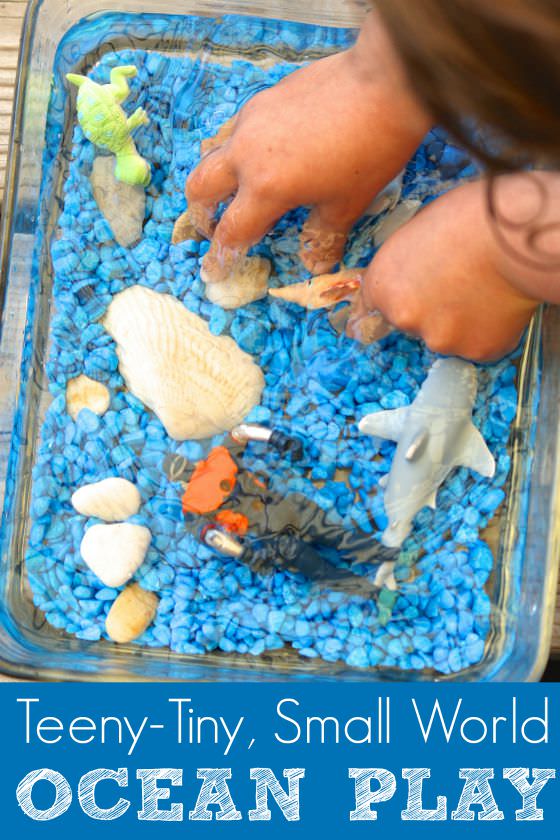
A small baking dish serves as a tiny ocean
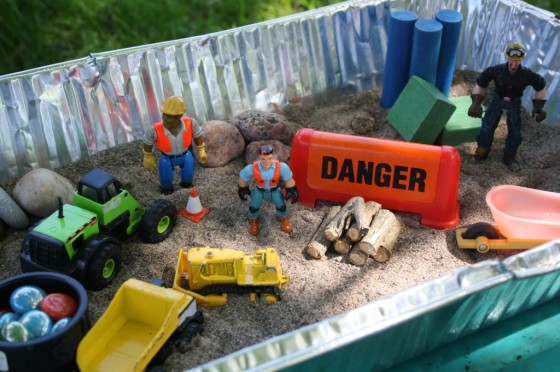
A construction site sensory bin in a foil roasting pan
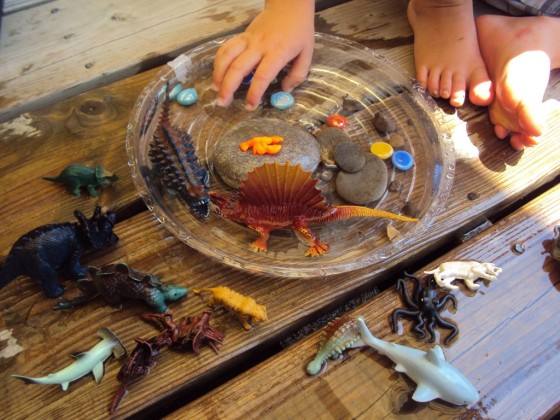
A dinosaur small world in a dollar store plastic saucer
For a larger sensory bin:
For 2 or more children, you’ll want a larger container so the kids can gather around it comfortably. These work well:
- a new, un-used litter box
- large, shallow cardboard box
- shallow storage container
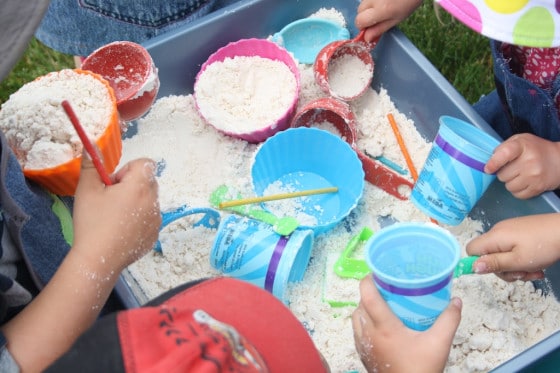
Children gather around a new litter box filled with cloud dough
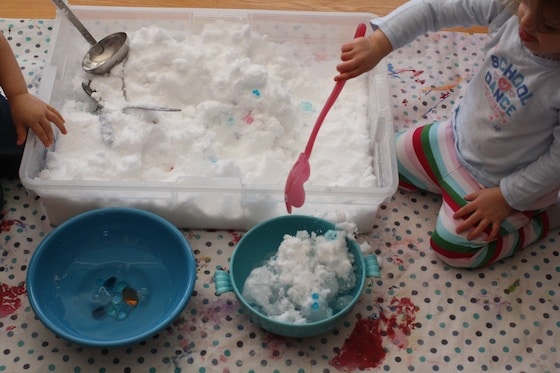
A shallow storage container makes a great sensory bin
Choose a theme:
For the theme of your bin, choose something that your child is passionate about. You can always opt for a theme that is new to your child too, as that will offer lots of opportunity for learning. Dinosaurs, farm, ocean, and construction themes are always popular here.
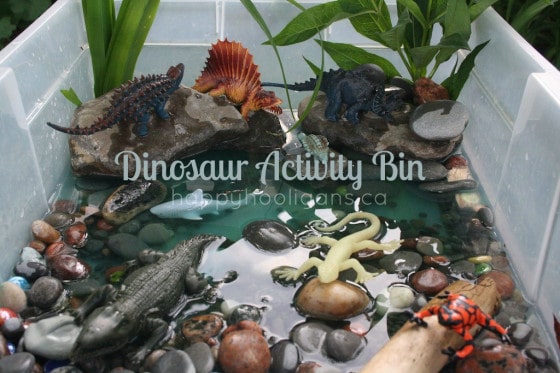
Dinosaur Sensory Bin
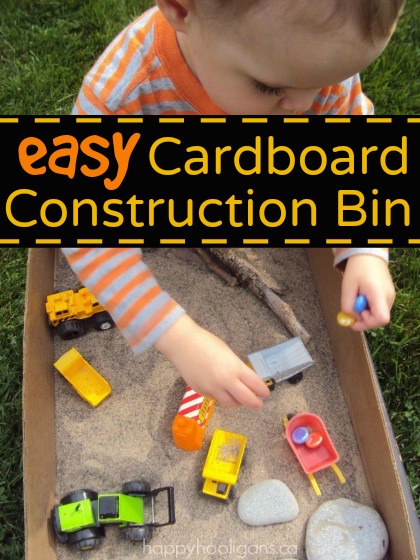
Construction Sensory Bin in a cardboard box
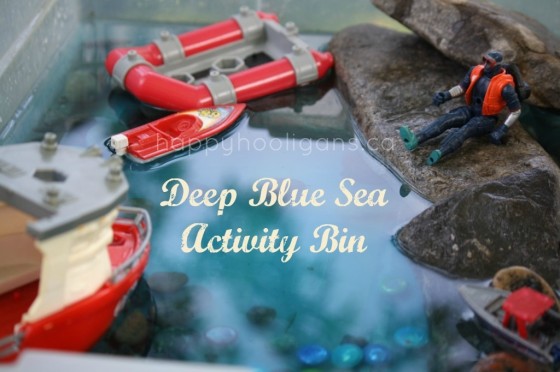
Deep Blue Sea Sensory Bin
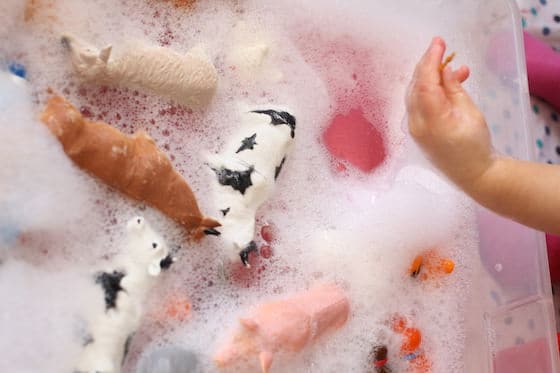
Farm Animal Toy Wash
Holiday themes are great for sensory bins too. I’ve made some great Valentines, Christmas and Halloween bins for the hooligans.
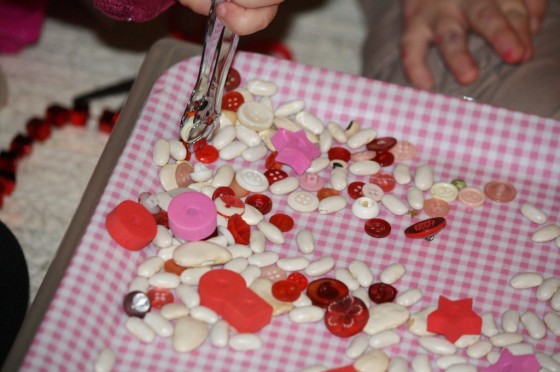
Valentines Sensory Bin
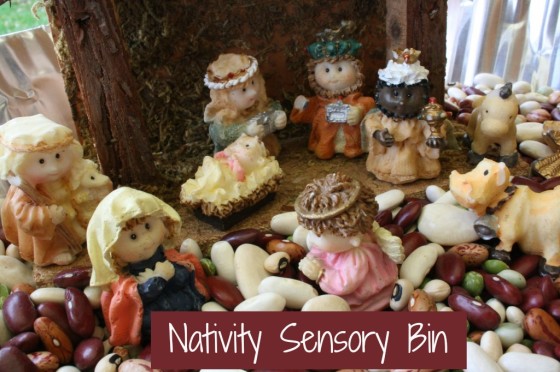
Nativity Sensory Bin
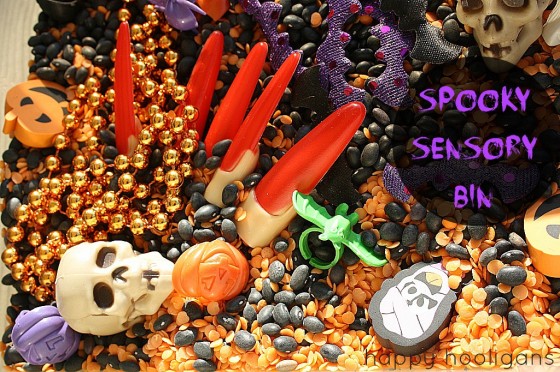
Halloween Sensory Bin
Sometimes I choose a popular trend for the theme of our sensory bin. For example, our “Frozen” sensory bin and our Polly Pocket Pool Party were both very popular with the hooligans.
I scour the toy room and my craft cupboards to find the items for our sensory bins. Animals, vehicles, characters and small accessories are always great. The dollar store and thrift shops are great places to find interesting items too.
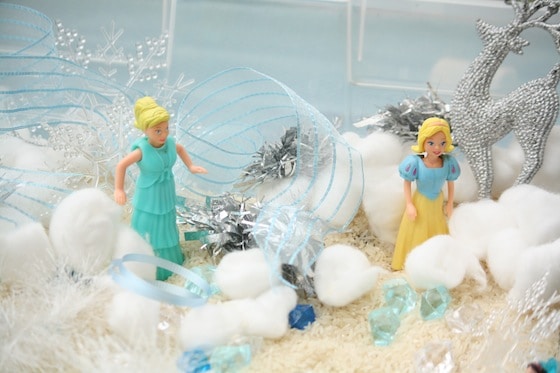
“Frozen” Sensory Bin with White Rice, Cotton Balls and Plastic Gems
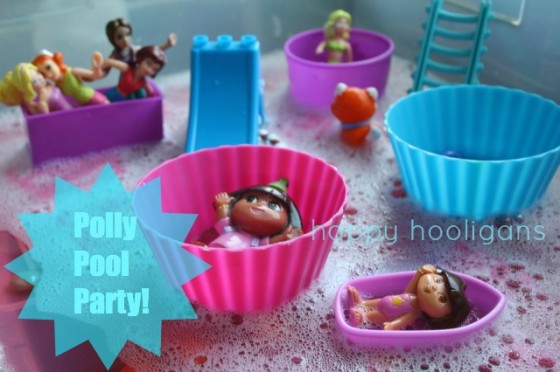
Polly Pocket Pool Party Water Bin
It’s also fun to make sensory bins to match the season.
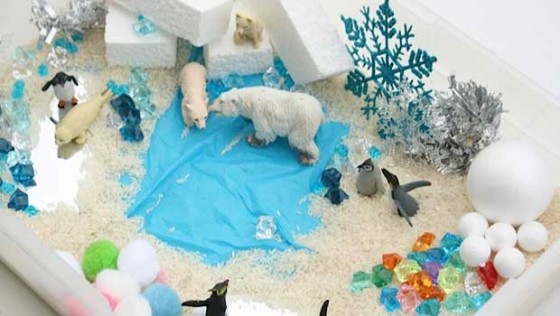
Winter Sensory Bin

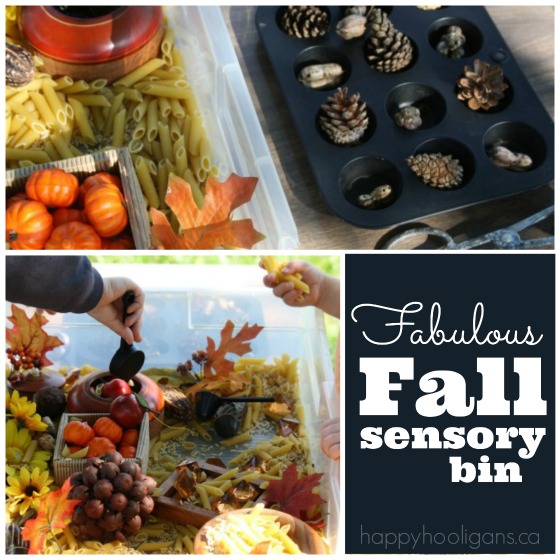
Fall Sensory Bin
Choose a base material for your sensory bin:
For your sensory bin base, items and substances that are interesting to look at and touch. Textured items that make a nice sound when you run your fingers through them are wonderful.
Rice and dry pasta are two bases that I use often in my sensory bins. Sometimes I leave it in its natural state, and sometimes I colour it. See how to dye rice here, and see how to dye pasta here.
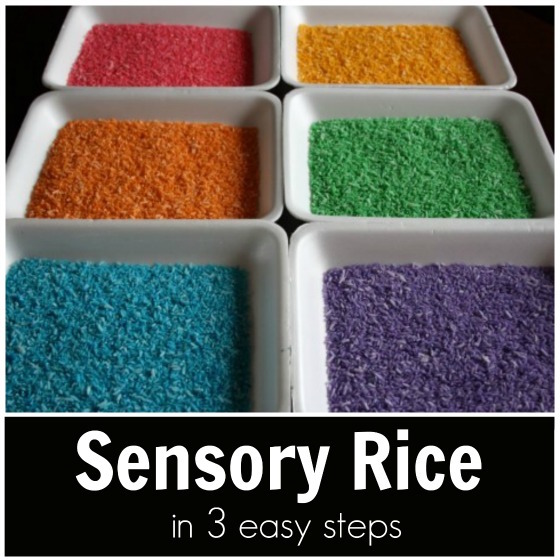
Suggested base materials:
- rice
- lentils
- pasta
- oatmeal
- mud
- sand
- coffee beans
- dried coffee grounds
- lentils
- corn kernels
- bird seed
- shredded paper
- water, coloured water, soapy water
- coloured ice cubes
- shaving cream
- snow
- water beads
- aquarium stones
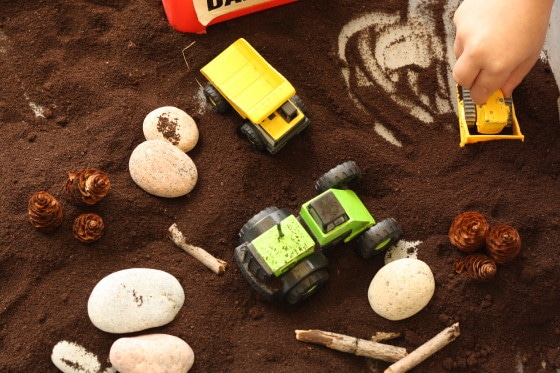
Coffee grounds make an excellent base for a construction site bin.
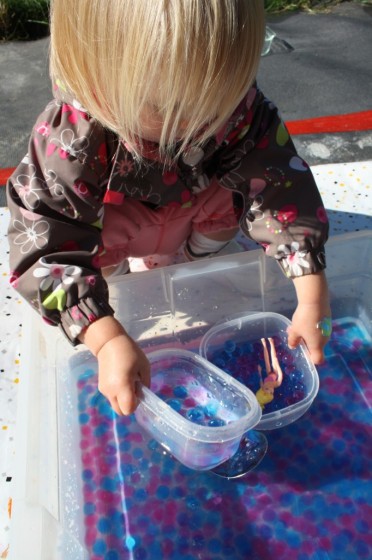
Waterbeads are amazing in a water bin or shaving cream bin, or on their own in a shallow basin with toys hidden among them.
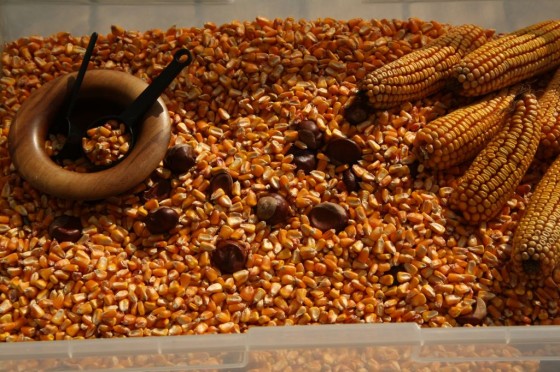
Sensory Play with Corn Kernels and Chestnuts
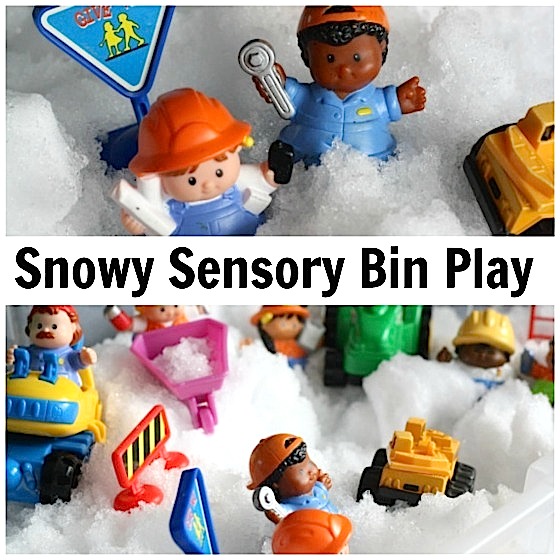
Snow Sensory Bin with Little Tykes Characters and Vehicles

Sensory Bin with Shaving Cream and Glitter
Items to put in a sensory bin:
To make your sensory bin intriguing, add lots of small, interesting items. Along with little toys and accessories, I often incorporate natural materials into our sensory bins because their colours, shapes and scents and textures are wonderful to explore, and they help children to connect with nature.
Some of my favourite natural materials for sensory bins are:
- leaves
- sticks
- stones
- small gourds
- chestnuts
- acorns
- pinecones
- flower petals
- sea shells
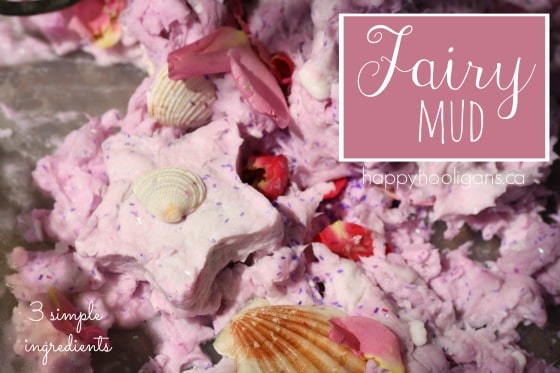
Fairy Mud Sensory Bin
Other items that add interest:
- beads
- buttons
- dollar store gemstones
- artificial flowers/fruit/vegetables
- ribbons
- pom poms
- small wooden blocks
- foam shapes
- magnetic letters
- cotton balls
- fabric scraps
- magnetic letters
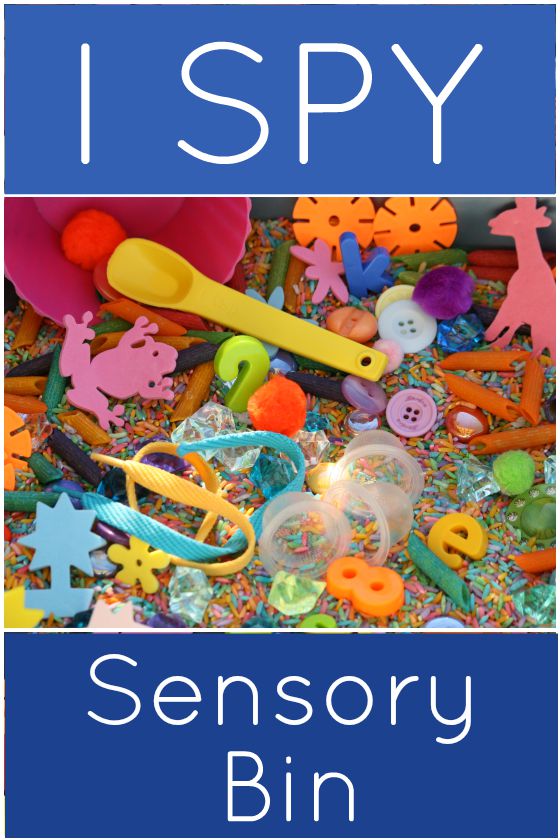
I Spy Sensory Bin with Coloured Rice and Random Small Items
Add tools and instruments:
In a construction bin or a farm or ocean bin, you may not want to add tools and instruments, because the vehicles and animals may be enough, but for more experimental bins, your child will require them to examine and explore the bin’s contents. Some of my favourite tools and instruments play to include in a sensory bin are:
- tweezers
- tongs
- small spoons
- scoops
- magnifying glass
- small bowls
- measuring cups
- basters
- syringes
- ice cube trays
- muffin tins
- baby food jars
These tools and instruments are all great for strengthening fine-motor skills, and coordination.
Adding an assortment of scoops, tongs, small jars and containers will take your sensory bin to a new level as children pour, sort and sift the contents of the bin!
The best thing about a sensory bin is the endless entertainment, skill-development and learning it provides. The next best thing, is that you can create countless bins using items that you already have on hand.
You know what that means… hours of good, old-fashioned play without spending a dime!
Get my latest e-book
40 hands-on, learning activities for kids ages 3-8. Recipes, experiments, art projects, printables and play ideas with links to 80 activities not featured in the book.
Download your copy today for just 9.99
Follow the Hooligans on Facebook

Jackie is a mom, wife, home daycare provider, and the creative spirit behind Happy Hooligans. She specializes in kids’ crafts and activities, easy recipes, and parenting. She began blogging in 2011, and today, Happy Hooligans inspires more than 2 million parents, caregivers and Early Years Professionals all over the globe.